 |
|
| You are here: Index > Surveys of Secondary Worlds > Agents of S.H.I.E.L.D. (2013) | |
Reviewing Marvel's Agents of S.H.I.E.L.D. Season One (2013)[written on 02-26-2026]There's a lot that can be said about the MCU. As a comic fan I could go on about its watering-down of the original stories and characterizations; as a movie fan I could talk about its mainstream success and then steady decline; and as a member of society I could elaborate on how its left its mark on modern culture. All that being said, I struck a deal with a close friend over some show recommendations: he would watch the Earth's Mightiest Heroes animated series, and I would watch a season of an early MCU show called Agents of S.H.I.E.L.D. The deal was struck, and while he has yet to follow through on his end (if you're reading this you should watch it) I've now finished my end of the bargain and may very well watch the next season. Do I like the season? Nope, I'm still doing this for the benefit of discussion. Despite that, though, I don't hate the show, and I now understand the appeal it has for many people. If you want some standard sci-fi television with secret agencies, superheroes, and fantastical relics, then chances are you'll tolerate the snark and find some enjoyment with this series. 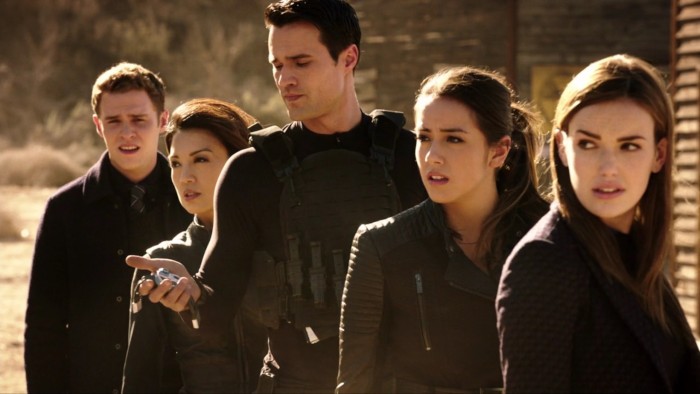
Personal Scorethis criteria uses the DecentFilms rating formula.Letter-Grade Recommendability: D+ Let's go back to 2013. Disney's acquisition of Marvel is fairly recent, and with the success of The Avengers under their banner the studio is willing to go all-out of franchising. The allure of the recent blockbuster was this idea of an interconnected film universe, and so Disney decides to expand this into television; partnering up with ABC Studios, they go off of a pilot put together by Joss Whedon and head a full series with Jed Whedon at the helm. Thus begins Agents of S.H.I.E.L.D., a spinoff of The Avengers in particular and reprising Clark Gregg as the already-established character Phil Coulson. I provide all of this backstory not because of history, but because this information is essential to understanding what this show is going for. This show wants you to know that it's part of a greater universe, and it does so obviously. Agent Coulson finds every opportunity to bring up that he knows major MCU characters like Thor and Iron Man, and that he was stabbed by Loki during the events of The Avengers. That last segment is a bit more important to his character in the show, but it only adds to the annoyance I had whenever he made some wry, spoken reference to the other blockbuster films. I honestly found the display annoying, despite Gregg managing to retain his charisma throughout. 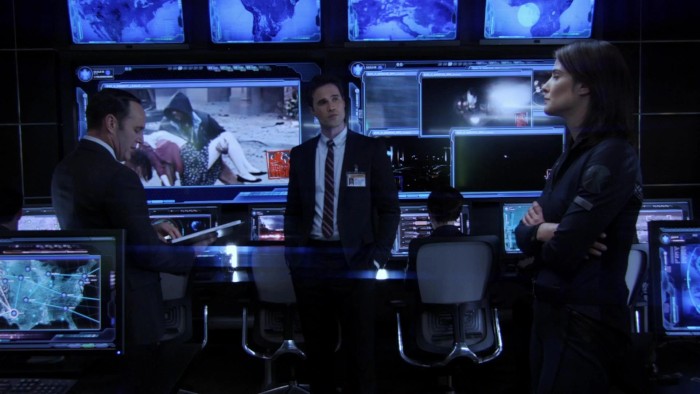 There were some aspects where this wider universe does enhance the show as advertised. As the show does operate in the background of the movies, there are several instances of movie events affecting the course of the show. The two main films that influence season one are Thor: The Dark World in the first half and then Captain America: The Winter Soldier in the second half, and quality of those films aside they do make for fun additions here. The result is a mix of all manner of missions ranging from teaming with Asgardians to sniffing out HYDRA's treachery, and while I'll get further into the execution of the show I think that the general ability to operate in sync with the continuity of the ongoing films is a commendable effort. Of course, I can't keep putting off talking about the agents in this Agents of S.H.I.E.L.D. show. My impression of the team varies wildly thanks to the aforementioned Whedon influence, most notably the primary lead and audience proxy Skye. Skye is a hacktivist that exemplifies the worst parts of that era of the internet, a snarky blogger who for a good deal of the season I very much disliked. The show does balance her out with much more likeable characters, though, british scientists Fitz and Simmons being consistently who I enjoyed seeing the most. Agents May and Ward play the respective hot guy and tough girl of the team, and they play their roles sufficiently albeit rather plain. Altogether they make a pretty decent team, all with their own roles to play, and I found that my criticisms of them were less notable when they were all working as a unit. For a show about an agent team, that dynamic is arguably more important than the individual parts. While Skye is the audience proxy, a lot of the show's character development actually goes to Coulson himself. A man with a taste for antiques and a strong sense of duty, it's the most recent events following his "death" in the 2012 film that begin to influence his loyalties. As annoying as I found Skye in the first half of the show, she serves as a good foil for the team leader, her snarky distrust of the government clashing with Coulson's adherence to SHIELD's protocols and secrets. Slowly his own secrets become known to him, and we see him become increasingly loyal to his personal team rather than to the wider organization as a whole. I found this development engaging and I did enjoy seeing how he tried to balance his feelings with what he believed to be his responsibility as an agent. 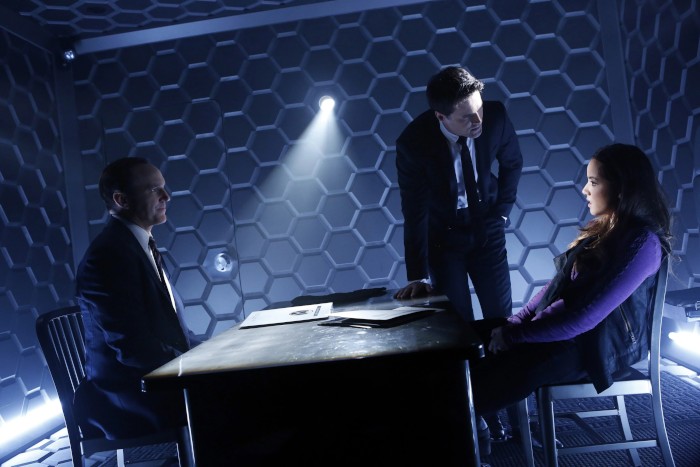 All that being said, I don't believe SHIELD as an organization got a satisfying critique. We understand that they engage in mass surveillance — and in Coulson's case pulled off a morally dubious operation — but other than that they don't really do anything that warrants mistrust. As much coverage as the agency gets in this show, they still come off to me as rather generic and entirely reactive, only acting when bad guys do something. Even areas that could be explored and critiqued, like SHIELD having global reach but also being a fundamentally American organization, just get glossed over. Which is a shame, because you could really pull compelling stories out of a realistic depiction of international politicking, but despite the "grounded" tone that the MCU advertises this is a pretty shallow depiction of an agency. I do think the reason that the show sets up but doesn't deliver on critiques of SHIELD is because, especially in the second half, moral ambiguity can no longer be a question. HYDRA is here, courtesy of Winter Soldier, and they're the objective bad guys of what looks to be the whole show. Breaking down the morality behind SHIELD would also warrant a similar dissection of HYDRA, and that's not happening. They need to be the bad guys without room for nuance because that's just who HYDRA is, and suddenly SHIELD doesn't look bad by order of comparison. What makes the appearance of HYDRA so disappointing for me is that, just like its counterpart, there is just nothing behind this organization. They have no long-term goals, no defining characteristics, no ideology in praxis. We don't even know if they're supposed to be Nazis; we hear that they're a splinter group from 1940s Germany, but the agents themselves deny that they're Nazis and in one scene the double Roman salute is discouraged. So what is the point of these people? To just cause problems, it seems, as all they do in the show is come out of cover to shoot people and steal special weapons from SHIELD. What does a win condition for HYDRA look like? We just don't know and therefore I didn't feel any sense of urgency in regards to stopping them. 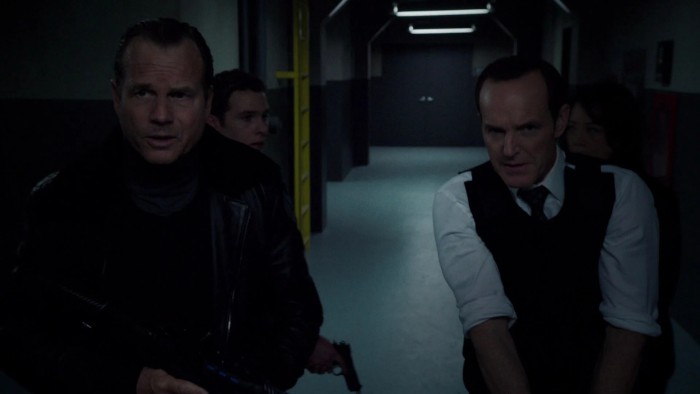 That being said, I did enjoy one character in particular out of the HYDRA essemble. Bill Paxton plays a very charismatic villain and I thoroughly enjoyed watching him on screen. It probably helps that he also had an actual backstory, motivation, and personal goal that actually engaged me with his story. At the same time, though, he's tied to the ethereal motivations of HYDRA, so while he does his best to do his own thing he is forced to pay lipservice to the fact that he's "coming out of the shadows" and all that. He in turn provides some depth for Agent Ward, but ultimately he alone fares the best in terms of characterization. There's other stuff going on in the show that I'll briefly mentioned. The Project Centipede plot I found very generic, and it was ultimately subsumed by HYDRA anyway so it had zero independent development. Deathlok is also tied with that and I found it equally generic, he was more in the background as a looming threat with some basic drama attached. The individual serials are what I found to be the strongest plot-wise, but I don't feel like there are any noteworthy examples worth bringing up. I did see that some of the villains were based off of real comic-book characters, which docks the show points in my book since there are zero costumes involved and everyone is in generic plainclothes. I'm being pretty negative, but I will say that the production value of the show is quite good. It's still a TV show, and that does show pretty frequently, but generally the effects were good and the fight choreography was above average at parts. The cinematography would occasionally have an interesting angle or shot that engaged me visually. The general soundtrack I don't remember all that much, but the main theme is actually really good and I found that I can recall it instantly in all of its grandiosity. From that standpoint I think the cast and crew did a good job making this an entertaining watch. And that's essentially what this is, in conclusion: entertaining. It's not particularly unique or interesting on its own, but rather a side dish and appetizer paying service to the main course of the movies. As disappointing as I think that is and how I feel its potential is wasted because of that, I think it's to be expected and for spinoff filler it manages to not be complete garbage. I will say that it was better than I expected when I first agreed to watch it, and given the popular consensus of season one being the weakest entry I may very well watch the next season. Will it be that much better, given the foundations laid here? I highly doubt it, but I'm open to the possibility. |
|
Exodite.org | 2023-2026




|
|